
Trying to lose weight while managing a busy schedule can feel like following advice that was written for somebody else’s life. You may have changed your meals and started walking, yet seen little progress. Or the weight comes back whenever work, sleep, or family responsibilities become complicated.
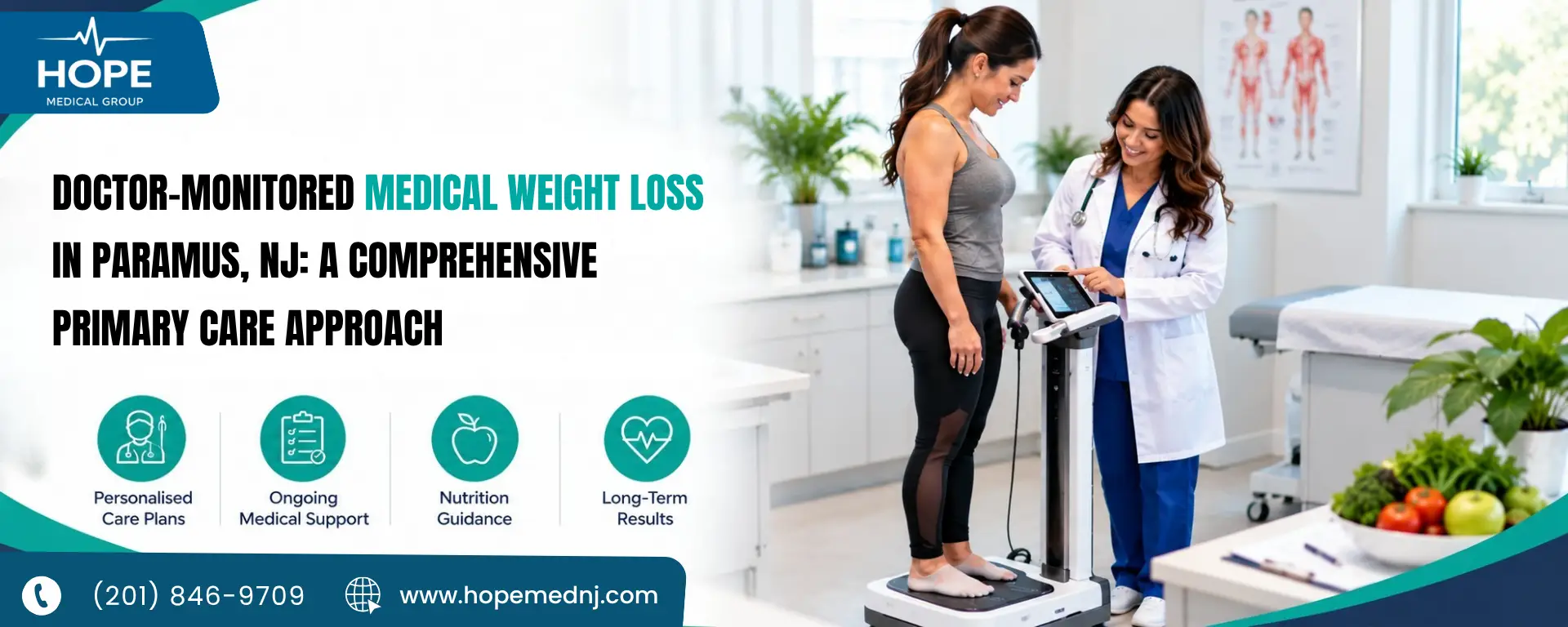
For people looking for medical weight loss in Paramus, NJ, doctor-monitored care offers a different starting point: your medical history, current health, daily habits, and realistic goals. At Hope Medical Group, we connect weight management with primary care, so the plan considers blood pressure, blood sugar, medications, sleep, and other factors that a commercial diet may overlook. This approach doesn’t promise a particular number on the scale. It helps us understand what may be getting in your way, choose appropriate treatment options, and make adjustments as your health changes.
How does medical weight loss differ from a diet plan?

Medical weight loss is a personalized approach to weight management guided by a healthcare professional. It combines a health assessment, practical nutrition and activity changes, and ongoing follow-up. Prescription treatment may be considered when clinically appropriate, but it isn’t required for everyone.
A standard diet often starts with rules: remove certain foods, count every calorie, or follow a fixed meal schedule. Those instructions may be difficult to maintain, especially when someone works shifts, takes medications, or lives with diabetes or chronic pain. Medical care begins by asking why a particular plan hasn’t worked and what can realistically change. Our weight loss program in Paramus focuses on understanding each patient’s goals before recommending next steps.
Why primary care matters when managing weight
Weight affects several areas of health, and those areas often affect weight in return. With primary care in Paramus, NJ, we can look at those connections instead of treating the number on the scale as an isolated problem.
Blood pressure, blood sugar, and cholesterol
A person may visit us hoping to change their clothing size, then discover that managing blood pressure or elevated A1C deserves equal attention. We review relevant readings, discuss existing diagnoses, and recommend tests based on symptoms and medical history. Screening is individualized; nobody needs every possible test simply because they’re seeking weight support. The notes that losing even 5% of starting body weight can improve some measures of health, including blood pressure, cholesterol, and blood sugar. For someone weighing 200 pounds, that represents 10 pounds, although individual benefits vary. The point is to set goals that matter medically as well as personally.
Health conditions and medications that complicate progress
Thyroid disorders, sleep problems, certain medicines, and changes in life stage can influence weight or make management harder. We may review thyroid testing when symptoms support it, consider signs of sleep apnea, and look for medicines associated with weight change. That doesn’t mean every plateau signals a hormone problem. If you’re already receiving chronic disease management, your weight plan should work alongside that care. Adjusting food intake or activity without considering diabetes treatment, for example, may create problems with blood sugar. Coordination matters.
What to expect at a doctor-supervised weight loss visit in Paramus, NJ
Your first appointment should be a thoughtful medical conversation. We want to learn what prompted you to seek support now and what you hope will improve beyond the scale.
A careful review of your health story
We discuss weight changes over time, previous diets, family history, current prescriptions, supplements, sleep, stress, and your usual eating pattern. We may check weight, blood pressure, and other measurements, then consider relevant lab results or testing. A waist measurement can sometimes add useful context because body mass index, or BMI, doesn’t capture every aspect of health risk.
Tell us about concerns that might seem unrelated, such as fatigue, snoring, joint discomfort, or frequent hunger after meals. They’re often useful clues. We also want to know about your work hours, food budget, cultural food preferences, and how much time you actually have for movement.
Goals that can be reviewed, not guessed
Instead of choosing an ambitious target from an online chart, we discuss what makes sense for your health and circumstances. This describes a 5% starting-weight reduction over about six months as one possible initial goal, not a rule for every patient. We can monitor changes in energy, stamina, blood pressure, glucose readings, and daily habits alongside weight. This gives us ways to recognize progress when a weekly number moves slowly.
What a medical weight management program may include

The foundation is a set of changes you can repeat on ordinary days. A medical weight management program should be flexible enough to evolve when your work schedule, health, or treatment needs change.
Food choices that fit your routine
We may start with portion sizes, protein and fibre sources, meal timing, and drinks that add calories without much fullness. Someone who skips lunch and arrives home ravenous needs different advice than someone who snacks all evening while working from home. You don’t need to abandon family meals or eat a complicated menu. It may be easier to add vegetables to familiar dishes, plan a satisfying afternoon snack, or prepare a few reliable breakfasts. We aim for an eating pattern that supports nutrition and works long-term.
Movement, sleep, and stress
Exercise matters, but an intensive gym routine isn’t the starting point for everyone. Walking after dinner, short activity breaks at work, or comfortable strength exercises may be sensible options depending on health and mobility. We discuss limitations before recommending changes, particularly for patients with heart concerns or joint pain. Sleep and stress deserve attention too. Poor rest can affect appetite and daily decisions, while a demanding schedule makes meal planning harder. If someone sleeps five hours after a late shift, simply instructing them to exercise harder misses a major part of the problem.
Are weight loss medications part of physician-supervised care?
Occasionally. Weight loss medications can support eligible adults alongside nutrition, physical activity, and follow-up. They aren’t automatic, and they don’t replace a conversation about medical history, safety, cost, and treatment goals. Describes common eligibility thresholds of a BMI of 30 or higher, or 27 or higher, with a weight-related condition such as high blood pressure or type 2 diabetes. BMI is a screening measure, not a complete assessment. A clinician must also review individual risks, contraindications, and the medication’s approved indications before making a recommendation.
Some medications affect appetite and fullness. Others work differently, and their dosing schedules and side effects vary. For some patients, gastrointestinal symptoms or other adverse effects affect which option is suitable. We also need to discuss pregnancy plans, medication interactions, relevant family history, and insurance coverage. At Hope Medical Group, our medical weight loss services include conversations about medication support when appropriate. We won’t assume that an injection, pill, or supplement is the answer simply because it’s popular. If treatment is prescribed, follow-up helps assess tolerability, response, and whether the plan needs to change.
Why follow-up visits matter when weight loss slows
Weight management rarely follows a perfectly straight line. Early changes may reflect shifts in water balance as well as body fat. Later, a plateau can occur even when someone is following the agreed plan. One flat week isn’t enough information to declare failure. Doctor-supervised weight loss in Paramus, NJ, gives patients a chance to review trends over time. We may look at symptoms, adherence, medication effects, movement, and whether the original goals still fit. Sometimes the next step is a small adjustment. Sometimes it is checking a medical issue or deciding that maintaining recent progress is appropriate.
Consistent check-ins also help catch changes that call for attention, such as dizziness, unexpectedly low blood sugar in someone taking diabetes medication, or side effects after starting treatment. Contact your clinician promptly concerning symptoms rather than waiting for the next routine appointment.
A practical tip: record your weight under similar conditions if you’ve agreed to track it, and bring the overall trend rather than focusing on a single reading. If tracking increases anxiety or feels unhealthy, tell us. There are other ways to assess progress.
Choosing a weight loss doctor in Paramus, NJ

When comparing local options, look for a clinician who asks about your health, explains decisions clearly, and makes time for ongoing care. A weight management doctor in Paramus, NJ, should be able to discuss potential causes of weight changes, realistic goals, and what happens if the first plan needs revision. Ask who will oversee your care, which visits or tests you may need, and whether medication is optional. It is also reasonable to ask how diabetes, blood pressure, or other existing conditions will be managed during the process. At Hope Medical Group, Dr Philip Fermano is a board-certified internal medicine physician. We combine primary care, prevention, and weight support locally. Patients can also explore our diabetes and metabolism care when blood sugar or related health concerns are part of the picture.
Cost deserves a clear conversation as well. Insurance may cover some office visits while applying different rules to testing or prescription medicines. Our insurance information explains how we help patients check benefits, but coverage should be confirmed for your particular plan.
Getting ready for your first appointment
You don’t need to arrive with a perfect food log or a list of successful diets. An honest picture of a typical week is much more useful. Bring your medications and supplements, any recent lab results, and any home blood pressure or glucose readings you’ve been asked to monitor.
Think about one or two goals that would improve daily life. Maybe you’d like to walk comfortably with your family, improve your lab results, or stop feeling stuck in a cycle of restrictive eating. We can discuss how those aims relate to safe and achievable medical care. Use the checklist above to bring questions you’d like us to answer during your visit.
Conclusion: Build a plan around your health, not a deadline
Weight management starts with understanding your circumstances and making sustainable decisions. For patients seeking medical weight loss in Paramus, NJ, connecting that effort with primary care makes it easier to address blood pressure, blood sugar, daily habits, and any medical concerns together. At Hope Medical Group, we’ll listen to your goals, review the factors affecting your health, and discuss appropriate next steps without promising quick fixes. To get started, request an appointment with our Paramus team. We can talk through your concerns and help you plan a manageable first visit.
