
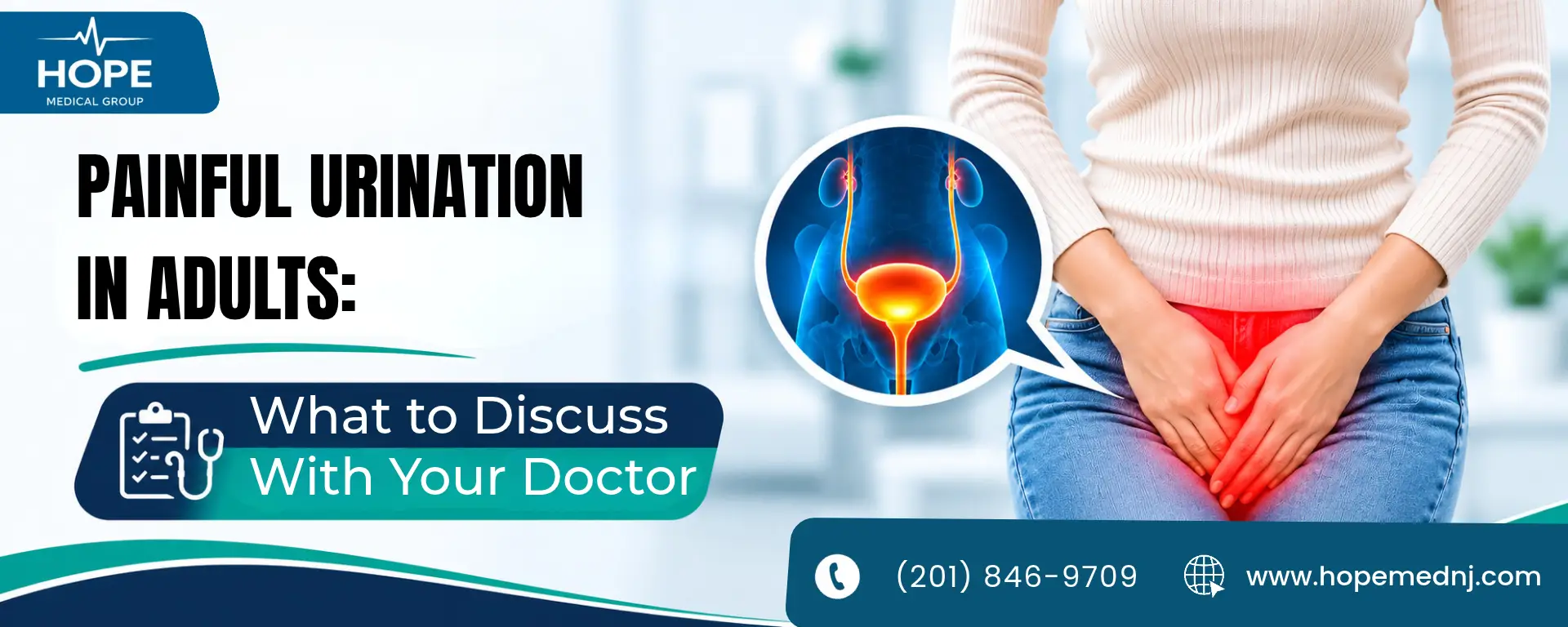
A sudden sting when you urinate can catch you off guard. Maybe it happens once, or the discomfort keeps interrupting your day. You may wonder whether it is an infection. Painful urination, or dysuria, can stem from urinary tract infections (UTIs), inflammation, or irritation. Burning alone cannot reveal the cause. If you are looking for a doctor for painful urination in Paramus, knowing what to share at your appointment can make the conversation more useful.
Quick Answer: What Should You Tell Your Doctor About Painful Urination?
Explain when the pain started, where the pain occurs, and whether the pain is burning, stinging, or pressure. Talk about urinary changes, fever, discharge, blood in urine, past infections, medical conditions, medications, sexual activity, or treatments you’ve tried.
What Does Painful Urination Feel Like, and Which Symptoms Matter?
Urinary discomfort feels different from person to person. Some notice a sting; others feel lasting pressure. These details help a primary care doctor in Paramus ask the right questions.
When and Where Does the Pain Occur?
Is there pain associated with the start of urination, during, or at the end? Is it at the opening of the genitalia or further in? Describe pain in the lower abdomen, back, or side.
Before-Your-Appointment Checklist
5 Important Details to Prepare Before Your Doctor Visit
Preparing a few details before your appointment can help your doctor better understand your symptoms and medical history. Use this checklist to organize the information.
Remember: Bring your medication list and any relevant medical records to help your doctor review your concerns.
Have questions or need to schedule an appointment?
Contact Us →How Would You Describe the Discomfort?
Burning, sharp, itching, aching, or pressure-like descriptions work well. Medical terminology is not required. Describe when it occurs and if it occurs or not. Your description helps guide the examination, but cannot confirm the cause.
What Other Urinary Changes Should You Notice?
Frequent urination, urgency to urinate, or cloudy or bloody urine can be signs of infection. It also makes a difference if the toilet is not completely emptying, it is difficult to start, or if the stream is weak. These changes can indicate infection, irritation, or a blockage of urine flow.
What Should You Discuss With Your Doctor About Painful Urination?

You do not need to arrive with a diagnosis. Describe what has happened, even details that seem unrelated. During a primary care visit, this helps your physician choose appropriate examinations or tests.
How Long Have You Experienced the Symptoms?
If it is uncomfortable, recall when it first occurred, if it occurred suddenly, and if it has changed. Talk about patterns following exercise, sex, or new products. If it has occurred before, report it to the doctor.
What Medical Conditions or Previous Infections Should You Mention?
Mention past UTIs, kidney stones, prostate issues, diabetes, urinary procedures, and pregnancy or possible pregnancy. Bring relevant results from a recent annual physical and explain whether earlier treatment resolved your symptoms.
Which Medications and Lifestyle Factors Should You Discuss?
Include prescribed medication, supplements, over-the-counter medications, and recent antibiotics. Talk about new products such as soaps, hygiene items, and contraceptives. Explain your typical habits with respect to caffeine, alcohol, fizzy drinks, etc., as some bladders can be irritated by these.
Should You Discuss Sexual Health and Unusual Discharge?
Yes. Recent sexual activity, new partners, or possible STI exposure may affect testing. Mention unusual vaginal or penile discharge, itching, or irritation. These are routine medical questions, and honest answers help narrow the possibilities.
Before-Your-Appointment Checklist: 5 Details to Prepare
- When the pain started and how often it happens.
- Where it hurts and how the discomfort feels.
- Other symptoms, including fever, discharge, or urinary changes.
- Previous infections, health conditions, and current medications.
- Home remedies or antibiotics you have already tried.
What Are the Common Causes of Painful Urination in Adults?

A UTI is only one possible cause. Several conditions can create similar burning or urgency. An examination is more useful than assuming you need antibiotics.
Urinary Tract and Bladder Infections
Bacteria can infect the urinary tract, causing burning, frequent urination, or lower abdominal pressure. For suspected infections, our infectious disease care includes evaluation, testing when appropriate, treatment guidance, and follow-up.
Prostate Problems and Urinary Symptoms in Men
Prostate inflammation, enlargement, or urethral infection can cause pelvic discomfort and changes in urine flow. A doctor for men’s urinary symptoms in Paramus can discuss these concerns during a men’s health visit.
Other Possible Causes of Urinary Pain
Kidney stones, STIs, and genital irritation can cause pain. So can vaginal infections, menopause-related changes, and bladder pain syndrome. Because symptoms overlap, assuming every burning sensation is a UTI can delay appropriate care.
When Should You See a Doctor for Painful Urination?
Do not wait for urinary pain to become severe. Persistent or recurring symptoms deserve attention. Certain warning signs require faster care.
Symptoms That Need a Prompt Primary Care Appointment
Contact a clinician for persistent burning, increasing urgency, returning symptoms, blood in urine, or unusual discharge. If you need a sick visit doctor in Paramus, NJ, our primary care services in Paramus include illness appointments. Ask about same-day availability.
Warning Signs That Require Urgent Medical Attention
Fever or chills with back or side pain may indicate a kidney infection, particularly alongside nausea or vomiting. Rapidly worsening discomfort needs assessment. Pregnant patients with painful urination should contact a healthcare professional promptly.
When Should You Seek Emergency Care?
Inability to pass urine is an emergency. Confusion, fainting, or sudden severe illness also warrant emergency care. Do not wait for an office appointment, even if the urinary burning began mildly.
How Will Your Primary Care Doctor Diagnose Painful Urination?
Diagnosis starts with a conversation. Your symptoms and history guide what happens next. An internal medicine doctor in Paramus, NJ, may recommend tests or a referral when needed.
Medical History and Physical Examination
Expect questions about pain, urinary habits, fever, sexual health, medications, and infections. Your doctor may examine your abdomen or assess genital or prostate concerns. Our internal medicine care in Paramus considers your whole health picture.
Urine Tests and Other Laboratory Investigations
A urinalysis may show signs of infection or another problem. A urine culture can identify bacteria and guide antibiotic choice. Your doctor may recommend STI testing, blood work, or additional investigations if indicated.
When Might You Need a Specialist Referral?
Persistent symptoms, recurring infections, suspected stones, or prostate problems may require more testing. Your physician can decide whether a urologist should be involved. A referral may help when the cause remains unclear.
What Treatment Options May Help With Painful Urination?
Urinary pain has no one-size-fits-all treatment. Care depends on whether the cause is bacterial, inflammatory, or something else. Your doctor can tell you what to look for.
Antibiotics for Bacterial Urinary Infections
Antibiotics treat bacterial UTIs, not every cause of dysuria. For antibiotic guidance from a doctor in Paramus, discuss allergies, recent antibiotic use, and test results. Follow prescribed instructions; never share or reuse leftovers.
Managing Discomfort During Recovery
Adequate fluids may help, though some medical conditions call for individualized advice. Your physician may suggest symptom relief while treatment works. Home remedies cannot replace care for an infection or another condition requiring treatment.
What If Your Symptoms Continue After Treatment?
Report pain that persists, worsens, or returns after treatment. Your diagnosis may need another look. Reviewing results, repeating tests, or considering a referral may be more useful than automatically prescribing antibiotics again.
How Can You Reduce the Risk of Recurring Urinary Problems?
Not every urinary problem is preventable. Some habits and medical follow-up may help. Recurring infections call for understanding why they happen.
Daily Habits That Support Urinary Health
Drink enough water for your needs and avoid holding urine for long periods. Stop using products that cause irritation. Urinating after sex may lower UTI risk for some people, but cannot guarantee prevention.
Managing Existing Medical Conditions
Diabetes, urinary retention, and some prostate conditions increase infection risk. Diabetes and metabolic care support blood sugar management. Regular medication reviews and follow-ups matter too.
When Should Recurring Infections Be Investigated?
Repeated symptoms need assessment, not leftover antibiotics. A doctor who evaluates recurring infections in Paramus can review past cultures, treatments, and risk factors. Further testing or a specialist may be appropriate.
How Hope Medical Group Supports Adults With Painful Urination in Paramus, NJ

At Hope Medical Group, we welcome questions from adults in Paramus and nearby Bergen County communities.
Personalized Primary Care With Dr. Philip Fermano
Dr. Philip Fermano, a board-certified internal medicine physician, leads our practice. We review symptoms, history, and medications before discussing tests or treatment. We explain the next steps and make room for questions.
Sick Visits, Infection Evaluation, and Ongoing Medical Support
We provide sick visits, infection evaluations, laboratory tests, medication reviews, and follow-up care. Same-day appointments may be available. Our chronic disease management supports diabetes, hypertension, cholesterol, and thyroid concerns, alongside men’s health needs.
Request an Appointment With Hope Medical Group
If discomfort continues or returns, contact us for evaluation. We provide adult primary care and specialist referrals when needed. Ask our team about appointment availability.
Experiencing Burning or Painful Urination? Schedule a Sick Visit With Hope Medical Group.
Conclusion
Painful urination can happen for several reasons, including urinary tract infections, kidney stones, prostate problems, and irritation. Paying attention to when the pain occurs, changes in urinary habits, and other symptoms can help your doctor understand what may be causing the discomfort. Your medical history, previous infections, and current medications also play an important role in determining whether testing, antibiotics, or further evaluation is needed. While healthy urinary habits and regular medical care may help reduce certain risks, persistent or recurring symptoms should not be ignored. If you get any major warning signs like fever with back discomfort or trouble passing urine, get medical assistance immediately.
Take the Next Step Toward Understanding Your Symptoms
If you’re experiencing burning, frequent urination, or recurring urinary discomfort, contact Hope Medical Group in Paramus, NJ, for personalized medical guidance. Call to ask about sick visit availability and to book an appointment with our primary care team.
